01
Problem
Importers could not quickly understand routes, transport options, customs requirements, or whether TrustWay had the certifications needed for complex cargo.
 International freight forwarding
 First-time importers can understand the full route into Kazakhstan, from loading to customs clearance. Dedicated transport and destination pages replaced a generic services page and created clearer paths from search to quote.
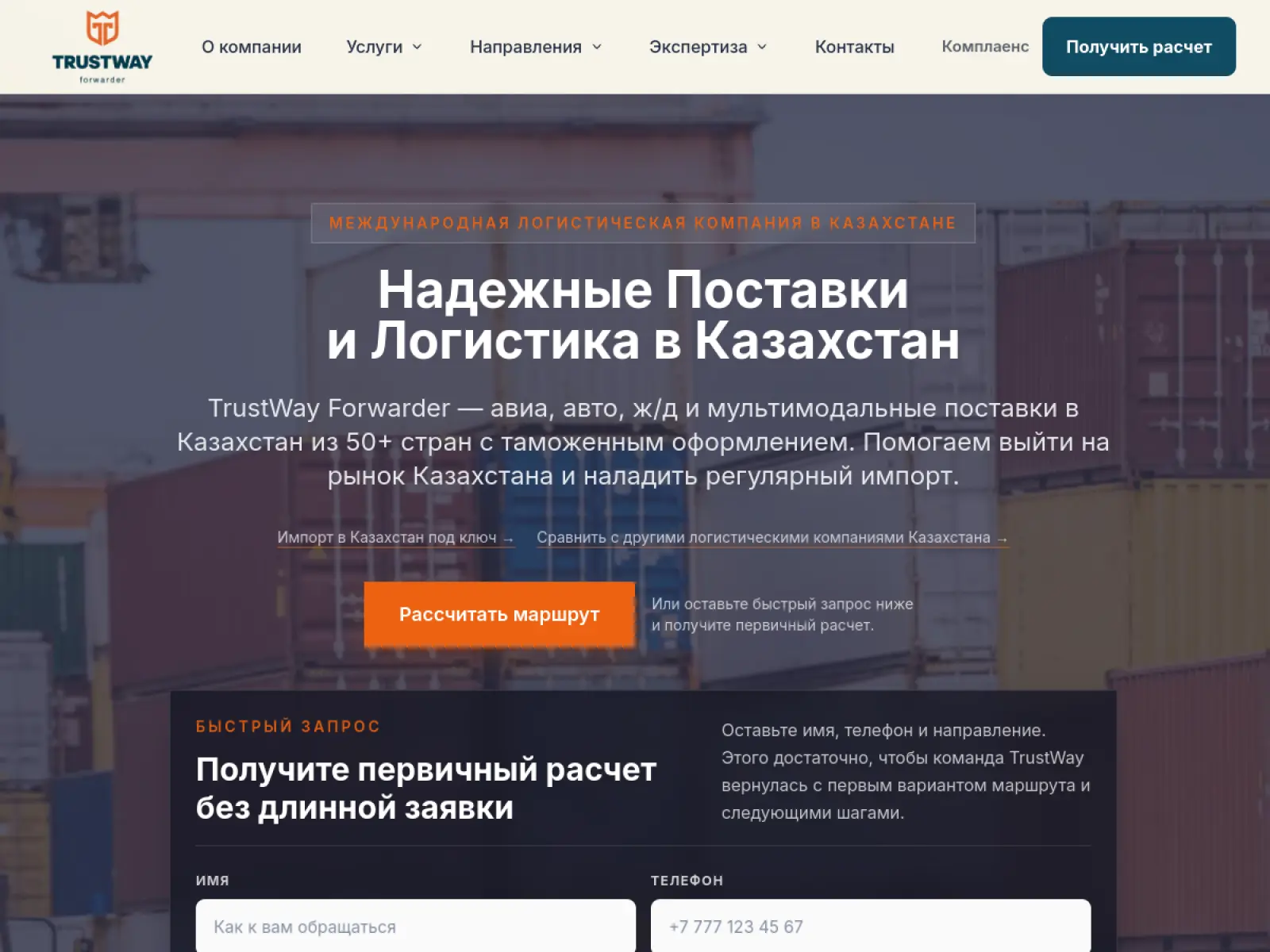 Live website Open the live site
 94
Lighthouse performance
0.9s
hero load time
100
quality standards
What was blocked, what changed, and what the client gained.
01
Importers could not quickly understand routes, transport options, customs requirements, or whether TrustWay had the certifications needed for complex cargo.
02
A multilingual logistics website with dedicated service and destination pages, certification proof, structured SEO/GEO content, and a direct route to a freight quote.
03
Buyers can understand the shipment path before contacting sales, while search engines and AI systems have clearer service, geography, and trust signals to index.
TrustWay had deep freight-forwarding experience, but the website compressed too many services and destinations into a generic presentation. A first-time importer had to contact the team before understanding the route, documentation, or customs process.
That uncertainty weakened conversion and made it difficult for search engines to connect TrustWay with specific transport modes, countries, and high-intent logistics queries.
We reorganized the website around the questions buyers ask before requesting a quote:
The finished site gives new importers a clear view of the shipment journey instead of asking them to decode logistics terminology. Each service and destination now has a focused search surface and a direct next step.
TrustWay can demonstrate the certifications and operating coverage required by industrial and regulated clients, while international suppliers have an English-language path into the Kazakhstan market.
For logistics companies, visibility is not only a rankings problem. Buyers need to understand whether a forwarder can handle their route, cargo type, compliance requirements, and customs process. The new structure brings those answers together before the first sales conversation.
Let's scope the system around it.